


Installing an Oil Catch Can


Thread Starter
Senior Member
Joined: 05-29-2015
Posts: 542
From: Cleveland, OH
So this is it!
I've been researching the 2.0L LNF PCV system for months now. As far as I can tell, no one has solved the real problem behind our valves coking (Excess buildup of oil vapor on the intake valves). All the kits/installations I've seen are catching the oil vapor from the valve cover to the turbo intake tube. This, in my opinion, is only 25% of the problem. The real problem lies in the intake manifold itself. Buried directly in the center is an "internal" PCV valve.
Here's how it works; I think!
Fresh (Clean,compressed) air from the turbo compressor housing enters the center of the valve cover through another PCV valve. The purpose for this valve is to keep dirty air from coming back into the turbo under boost conditions. The clean air pressurizes the crankcase, that has to have somewhere to go. The first, and direct route is the intake manifold PCV which is connected through the oil galleys. The second, is out through the second port in the valve cover (Passenger side). The galleys above the valve cover are not nearly as pressurized though. This is why they are tied to a constant vacuum, the intake tube. While installing a catch can here is effective, it's not nearly enough.
The wife's SS has been my guinea pig into the LNF world. I've learned a TON here in the short time I've been around. There's a bunch of knowledgeable, friendly, people in our "family" and I'd like to think they've all had a hand coming up with a true solution to our problem. And it's a HUGE problem, not to be ignored. The Subaru/import guys are actually pulling the intake manifold and camshaft to walnut blast their valves clean. That's too much work for me. As you've seen, I'm not afraid of a little work!
The reason I'm on this journey is the new GEN 3 Crate motor / S256 Turbo is a BIG reliability concern for me. I inspected the valves I could reach with my scope at 1400 miles. I went in through brake booster port and was able to reach cylinders 4,3,2. The intake walls weren't bad, but it was barely broke in at the time of inspection. Here's what we got.
Cyl. Valve#
4 - 2

4 - 1
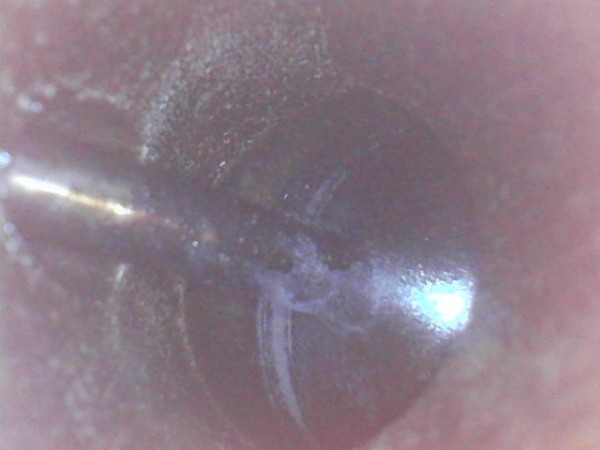
3 - 2
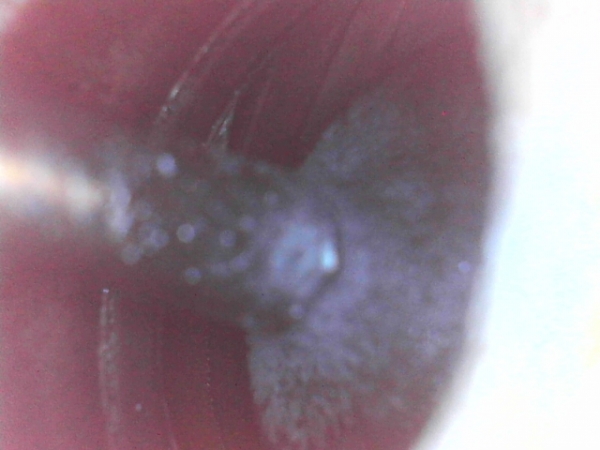
3 - 1

2 - 1

Cylinder 2 was actually pretty clean. I wonder if its due to the airflow favoring the one side? We'll see in a few days, I'll the the intake off of the SS and have a 4000mi inspection.
So on to the solution! We need to relocate the internal PCV valve so the it enters the intake after the air has been cleaned of oil vapor. Good news! I was willing to do whatever it took to accomplish this. It turned out WAY easier than I had ever imagined. Please note, this modification is not for the faint of heart. We'll be drilling and tapping into expensive parts. ZZP was gracious enough to send me a brand new LDK intake manifold to play with! NICE!
Here's a shot of the internal PCV valve, nestled right in the middle of the intake manifold.

This is the inside shot. Barely visible but we're looking in through the throttle body. The green around the shot is the TB O ring.
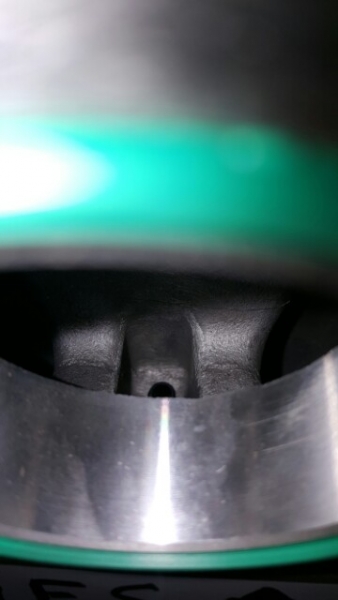
A fancy dancy removal tool was fashioned from a bent 3/8" steel rod. A couple good whacks from the inside and it pops right out.

Here's the intake with the valve removed

Now we need to block the hole leading into the intake so we can reroute it through a catch can. Luckily, this is what I thought would be difficult. Turned out really easy. All you need is a 1/8"NPT tap and plug! No drilling required(yet) There will be a 11/32" drill bit required to get the dirty air out of the intake.
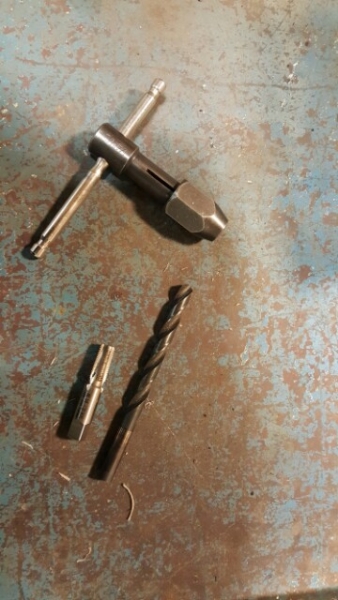
And once the hole is tapped I used a 1/8" NPT plug to seal the intake off from the dirty air. Here's the finished plug

That's what I've got for now. I plan to see what room I've got to work with for the exit. The bottom is taken up by the fuel rail, so its going to have to be on tap. More photos to come!
Here's how it works; I think!
Fresh (Clean,compressed) air from the turbo compressor housing enters the center of the valve cover through another PCV valve. The purpose for this valve is to keep dirty air from coming back into the turbo under boost conditions. The clean air pressurizes the crankcase, that has to have somewhere to go. The first, and direct route is the intake manifold PCV which is connected through the oil galleys. The second, is out through the second port in the valve cover (Passenger side). The galleys above the valve cover are not nearly as pressurized though. This is why they are tied to a constant vacuum, the intake tube. While installing a catch can here is effective, it's not nearly enough.
The wife's SS has been my guinea pig into the LNF world. I've learned a TON here in the short time I've been around. There's a bunch of knowledgeable, friendly, people in our "family" and I'd like to think they've all had a hand coming up with a true solution to our problem. And it's a HUGE problem, not to be ignored. The Subaru/import guys are actually pulling the intake manifold and camshaft to walnut blast their valves clean. That's too much work for me. As you've seen, I'm not afraid of a little work!
The reason I'm on this journey is the new GEN 3 Crate motor / S256 Turbo is a BIG reliability concern for me. I inspected the valves I could reach with my scope at 1400 miles. I went in through brake booster port and was able to reach cylinders 4,3,2. The intake walls weren't bad, but it was barely broke in at the time of inspection. Here's what we got.
Cyl. Valve#
4 - 2
4 - 1
3 - 2
3 - 1
2 - 1
Cylinder 2 was actually pretty clean. I wonder if its due to the airflow favoring the one side? We'll see in a few days, I'll the the intake off of the SS and have a 4000mi inspection.
So on to the solution! We need to relocate the internal PCV valve so the it enters the intake after the air has been cleaned of oil vapor. Good news! I was willing to do whatever it took to accomplish this. It turned out WAY easier than I had ever imagined. Please note, this modification is not for the faint of heart. We'll be drilling and tapping into expensive parts. ZZP was gracious enough to send me a brand new LDK intake manifold to play with! NICE!
Here's a shot of the internal PCV valve, nestled right in the middle of the intake manifold.
This is the inside shot. Barely visible but we're looking in through the throttle body. The green around the shot is the TB O ring.
A fancy dancy removal tool was fashioned from a bent 3/8" steel rod. A couple good whacks from the inside and it pops right out.
Here's the intake with the valve removed
Now we need to block the hole leading into the intake so we can reroute it through a catch can. Luckily, this is what I thought would be difficult. Turned out really easy. All you need is a 1/8"NPT tap and plug! No drilling required(yet) There will be a 11/32" drill bit required to get the dirty air out of the intake.
And once the hole is tapped I used a 1/8" NPT plug to seal the intake off from the dirty air. Here's the finished plug
That's what I've got for now. I plan to see what room I've got to work with for the exit. The bottom is taken up by the fuel rail, so its going to have to be on tap. More photos to come!

 )
)

Senior Member
Joined: 09-07-2008
Posts: 1,016
From: Mebane, NC
Nice write-up with pictures. I believe your conclusions are correct. I've looked over the one I have apart as well to confirm my and your theory. You also appear to be doing it the same way I intend to. 1st have to plug the PCV hole like you did. Then you have options, you can drill and tap the VC in one of three spots to get into the same are that the original PCV was drawing from, or you can drill and tap a hole in the intake in between the pipe plug you installed and the head. Haven't looked but that may be a tight fit.
In any event once you've figured out you draw spot you would plumb over to the catch can. For the return back to the intake manifold you could just pick a spot where the flitting wouldn't be in the way.
My intention is to make a machined fitting that will hold the original PCV and put it in the line going from the catch can back to the intake manifold. If you were to put the PCV valve in the line running from your new vapor pick off fitting and the catch can you would pressurizing the catch can.
BTW was it hard to convince your better half that you needed to take her car apart again?
In any event once you've figured out you draw spot you would plumb over to the catch can. For the return back to the intake manifold you could just pick a spot where the flitting wouldn't be in the way.
My intention is to make a machined fitting that will hold the original PCV and put it in the line going from the catch can back to the intake manifold. If you were to put the PCV valve in the line running from your new vapor pick off fitting and the catch can you would pressurizing the catch can.
BTW was it hard to convince your better half that you needed to take her car apart again?

Administrator
Joined: 10-13-2011
Posts: 39,900
From: Welland,Ont Canada
Turbo Tech Racing has a machined block pvc housing
I'm sure I saw it on their website and in the kit for their sheet metal intake manifold
Found it!
http://www.turbotechracing.com/produ...dcategory=5611
I'm sure I saw it on their website and in the kit for their sheet metal intake manifold
Found it!
http://www.turbotechracing.com/produ...dcategory=5611
Last edited by Oldblue; Dec 21, 2015 at 05:57 PM. Reason: Pictures didn't open
Senior Member
Joined: 04-26-2009
Posts: 669
From: City of Champions
I do believe that the correct oil for DI engines, is a major factor...
A quote from Bobs the oil guy:
The only real answer is as good of a synthetic as your wallet can afford and short change intervals, as DI engines dilute the oil by 4,800 miles.
Another article found:
Addressing GDI Needs
Another factor to consider when choosing motor oil is how it may contribute to intake valve deposits. This has become a major issue on many late model Gasoline Direct Injection (GDI) engines.
Deposits can form on the intake valves in these engines because fuel is sprayed directly into the combustion chamber rather than the intake port.
A motor oil with a low volatility rating (its “NOACK” number, which is based on the ASTM D5800 lab test) is best for GDI engines because it will reduce oil consumption and help keep the PCV system and intake valves clean. Most recent European oil specifications call for a low NOACK rating (less than 15%).
I've only used Pennzoil ultra platinum in my buggy since new... with short 3,000 mile changes......
I don't throw this low mileage oil away, as I recycle it into 2 other, non DI engine cars that have over 100k miles on them, with zero issues...
I have never had any issues with my buggy, & I drive it like I stole it, every day...
Last time at the track, last month, I turned my best ET/MPH ever, 12.28 @ 112.67, & my buggy also turned 30,000 miles that day...
A quote from Bobs the oil guy:
The only real answer is as good of a synthetic as your wallet can afford and short change intervals, as DI engines dilute the oil by 4,800 miles.
Another article found:
Addressing GDI Needs
Another factor to consider when choosing motor oil is how it may contribute to intake valve deposits. This has become a major issue on many late model Gasoline Direct Injection (GDI) engines.
Deposits can form on the intake valves in these engines because fuel is sprayed directly into the combustion chamber rather than the intake port.
A motor oil with a low volatility rating (its “NOACK” number, which is based on the ASTM D5800 lab test) is best for GDI engines because it will reduce oil consumption and help keep the PCV system and intake valves clean. Most recent European oil specifications call for a low NOACK rating (less than 15%).
I've only used Pennzoil ultra platinum in my buggy since new... with short 3,000 mile changes......
I don't throw this low mileage oil away, as I recycle it into 2 other, non DI engine cars that have over 100k miles on them, with zero issues...
I have never had any issues with my buggy, & I drive it like I stole it, every day...
Last time at the track, last month, I turned my best ET/MPH ever, 12.28 @ 112.67, & my buggy also turned 30,000 miles that day...
Last edited by 2005HHRauto; Dec 21, 2015 at 08:25 PM.
Thread Starter
Senior Member
Joined: 05-29-2015
Posts: 542
From: Cleveland, OH
Turbo Tech Racing has a machined block pvc housing
I'm sure I saw it on their website and in the kit for their sheet metal intake manifold
Found it!
Turbo Tech Racing PCV Cartridge for LNF Intake Manifold - Air Management
I'm sure I saw it on their website and in the kit for their sheet metal intake manifold
Found it!
Turbo Tech Racing PCV Cartridge for LNF Intake Manifold - Air Management
Looked into it. The stock intake out performs the cylinder head when it comes to flow. No real reason to change it.
Thread Starter
Senior Member
Joined: 05-29-2015
Posts: 542
From: Cleveland, OH
Nice write-up with pictures. I believe your conclusions are correct. I've looked over the one I have apart as well to confirm my and your theory. You also appear to be doing it the same way I intend to. 1st have to plug the PCV hole like you did. Then you have options, you can drill and tap the VC in one of three spots to get into the same are that the original PCV was drawing from, or you can drill and tap a hole in the intake in between the pipe plug you installed and the head. Haven't looked but that may be a tight fit.
In any event once you've figured out you draw spot you would plumb over to the catch can. For the return back to the intake manifold you could just pick a spot where the flitting wouldn't be in the way.
My intention is to make a machined fitting that will hold the original PCV and put it in the line going from the catch can back to the intake manifold. If you were to put the PCV valve in the line running from your new vapor pick off fitting and the catch can you would pressurizing the catch can.
BTW was it hard to convince your better half that you needed to take her car apart again?
In any event once you've figured out you draw spot you would plumb over to the catch can. For the return back to the intake manifold you could just pick a spot where the flitting wouldn't be in the way.
My intention is to make a machined fitting that will hold the original PCV and put it in the line going from the catch can back to the intake manifold. If you were to put the PCV valve in the line running from your new vapor pick off fitting and the catch can you would pressurizing the catch can.
BTW was it hard to convince your better half that you needed to take her car apart again?
I have the same plan reusing the existing PCV valve in a new housing. The return line has plently of space to return. I don't know if it would disturb the pressure brakes by T'ing in there..
The catch can will be pressurized, only as much as the system overall. No more fancy catch cans either, I've been round and round. Just going use 2 Air/Oil separators, brass sintered filters.
Her car was never intended for winter use. She didn't expect the full surgery though. Parts needed to go back to ZZP. Since I had to take off the downpipe, might as well take off the turbo and inspect. Then since that's off, we should get the PCV figured out...on and on.
My main concern is being able to tune, without HP we're getting no where fast this spring. We'll see what Santa's got to bring!

Senior Member
Joined: 09-07-2008
Posts: 1,016
From: Mebane, NC
Teeing into the power brake line should be ok... I would suggest you should drive it first to make sure it doesn't cause an issue.
I wouldn't even consider using another PCV valve other than the one that the system was originally tuned and set-up for. These things are temperamental enough no use experimenting with something else at this point.
If Santa is nice and you get HPT you should be able to tame it at that point. Will take time but you should be able to get a handle on it at that point. You can also use it on other cars/HHR's you have in your fleet.
As far as separators go, I've been using a modified air line separator on my truck for ~ 3 years now. It needs to be plumbed backwards and I added a 3" 3/8" NPT nipple down the center with hole drilled it it and plugged at the bottom. The area where the holes are has a baffle at the top and bottom with coalescing filter material in the middle. It will generally catch a good 3-4 oz of fluid in ~ 2 months.
How are you going to clean the back side of the intake valves or are you going to let you meth system clean them?
That is the main reason I'm going to the 5th inject system, keep the back side of the intake valves clean. Not only will it stop the coking issue we are seeing, it will also help alleviate any knock issues we might see from the contaminated air charge. The catch can systems we are designing will go a long way to stopping those issues.
I wouldn't even consider using another PCV valve other than the one that the system was originally tuned and set-up for. These things are temperamental enough no use experimenting with something else at this point.
If Santa is nice and you get HPT you should be able to tame it at that point. Will take time but you should be able to get a handle on it at that point. You can also use it on other cars/HHR's you have in your fleet.
As far as separators go, I've been using a modified air line separator on my truck for ~ 3 years now. It needs to be plumbed backwards and I added a 3" 3/8" NPT nipple down the center with hole drilled it it and plugged at the bottom. The area where the holes are has a baffle at the top and bottom with coalescing filter material in the middle. It will generally catch a good 3-4 oz of fluid in ~ 2 months.
How are you going to clean the back side of the intake valves or are you going to let you meth system clean them?
That is the main reason I'm going to the 5th inject system, keep the back side of the intake valves clean. Not only will it stop the coking issue we are seeing, it will also help alleviate any knock issues we might see from the contaminated air charge. The catch can systems we are designing will go a long way to stopping those issues.