When you click on links to various merchants on this site and make a purchase, this can result in this site earning a commission. Affiliate programs and affiliations include, but are not limited to, the eBay Partner Network.
Problems/Service/RepairsIf you have a problem with your HHR, want a tip on repairing or performing a particular service to you HHR here is the place to post!
So I thought I would give this it's own thread. TPMS sensors in both of my HHR's are not working at all due to dead batteries. So instead of buying the normal TPMS, I decided to try
There are some pro's & con's of each system, and there are probably more that I haven't thought about yet...
Stock/internal TPMS :
Pro's
> inside the tire so your tires are balanced with them
> adding air is easy
> cannot be stolen easily
Con's
> batteries are not user replaceable
> TPMS must be replaced when batteries go out
> can be very expensive for a full set - I think I paid $48 each for AC Delco TPMS when I got them for the LT & they ended up being 'new old stock' so the batteries didn't last but about 3 years.
> tires need to be removed from car to replace TPMS
> Tire bead has to be broken before you can replace TPMS
> Have to relearn tire positions every time tires are rotated
Masoll External TPMS Sensors :
Pro's
> Super easy to install - they just replace your valve stem caps!
> user replaceable batteries
> You can keep the TPMS in the same position even when rotating tires just by removing from the valve stem before rotating tires.
> Includes a TPMS relearn tool with a 9V battery already in it.
> took me a total of 4 minutes to install & learn.
> Includes "locking nuts" extra o-rings, and a wrench for installation
> Cost $45 for a set of 4
Con's
> Included batteries have a 2-year life according to documentation <added 4/6/26
> Have to be removed before you can add air to the tires.
> If taking in to have a shop install new tires, you'll probably have to remove these before hand...
> Adds 1/2 ounce (14 grams) to the top of the valve stems which might throw off balance, and may stress the valve stem potentially creating a leak over time - the later could be alleviated by the use of metal bolt-in valve stems.
> increased potential for theft
both a pro and con.....
> when installed correctly, trying to remove them by hand, just removes the outer cover that gives access to the battery.
Before I go crazy with the photos, I just wanted to say a few things:
> I was SHOCKED, at how quickly and easily these went on and were paired to the HHR! 4 minutes was all it took, and that might have even been closer to 3.5 minutes.
> Pressure accuracy seems pretty close, I filled all tires to 45 psi about 10 days ago, TPMS sensors show between 39 & 44 psi on my scantool.
> Proper installation reduces chance of these being stolen. Their kit includes a brass locking nut for each TPMS, which is just a second nut that goes on the valve stem before you put the TPMS on the valve stem. You tighten the TPMS with the included wrench, then turn the locking nut till it's tight against the nut on the TPMS. This acts as a lock nut in that the two nuts are putting opposite pressure against the corresponding threads, making it more difficult to remove the TPMS without the wrench. In fact, I had to loosen the lock nut with the wrench, then loosen the TPMS with the wrench just to bring one into the house & weigh them on my kitchen scale. I also checked to see how easy it would be to steal them by trying to remove that one by hand, which is when I found out that the battery cap will come off if you turn hard enough by hand without a wrench. So while difficult to steal the actual sensor, they could unscrew the battery cap & remove the battery just to mess with you.
Here's me putting one of them back on the HHR after weighing it. It's already paired to that tire, so no need to relearn. Had a bit of trouble due to filming & doing it at night, was hard to judge the angle of the valve stem with phone light source
************************************************** ****
DISCLAIMER: DO NOT TRY RUNNING YOUR TIRES OVER-INFLATED:
************************************************** ****
Only car I ever drove with the factory recommended air pressure (for any real amount of time) was also the only car I ever bought new - 2001 Hyundai Accent. The factory tires were rated for 50,000 miles, I corrected air pressure every week in all 4 tires, I rotated the tires twice a year, & had to replace all 4 tires after just 22,000 miles, due to premature wear on both shoulders of all 4 tires.
I replaced those with Michelin tires rated for 60,000 miles, which remained on the vehicle till I donated it to "Cars for Habitat" at around 87,000 miles, about13 years after purchase. I ran those 6 to 8 psi above Hyundai's recommended pressure, just high enough that the sidewalls didn't bulge out. Tires had very even wear on them after more than 60,000 miles, and the Accent gas mileage was about 20 miles per tank better with the Michelin's.
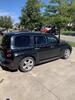
Likewise, I've run the tires on my 2010 HHR LT (below) at 38 to 40 psi for over 30,000 miles now with zero noticeable negative effects, and again, about 12 to 15 miles per tank better gas mileage - EDIT APPLIED: first 3 tanks of gas I had tires at 30psi to get a baseline mpg.
I was taught that the sidewalls on any tire should never bulge out, but also to keep an upper limit of not less than 5psi below the maximum PSI on the side of the tire. At 30 PSI, even the 97 load index tires that are currently on the LS bulge out at the sidewalls... They are rated for up to 50 PSI.
Important note here: Tires were inflated a few minutes after a 2 hour drive on a 92F sunny day, that's why I went to ~45 PSI, also the scantool reading was as soon as I got home from work last night, they were down to 37 - 41 this morning. Still possibly 1-4 psi over the sweet spot for best fuel economy & performance... but I want to see the MPG at next fuel up before adjusting.
Added a disclaimer, and one additional con to the Masoll TPMS.
There's one thing that everyone should understand about the manufacturers recommended psi rating: Manufacturers ratings are the minimum psi recommended for when the car is at it's maximum GVWR. That means, you and 4 other passengers, you and a back seat / trunk full of whatever, you hauling a trailer, etc... even though it's not recommended to run a tire at the minimum pressure when hauling a full load. That number is there to protect automobile manufacturers against liability. Running any other pressure, even if not fully loaded, frees GM(et.al.) from those liabilities.
OK, you don't need to benefit from my experience. You had bad teachers, radial tires always have a sidewall bulge by design; explained that 30 times a day 55 years ago at the tire shop.
Believe and do what you want. Beware of Genisys.
OK, you don't need to benefit from my experience. You had bad teachers, radial tires always have a sidewall bulge by design; explained that 30 times a day 55 years ago at the tire shop.
Believe and do what you want. Beware of Genisys.
I was thinking the exact same thing. He might get better gas milage, but I suspect he also has a stiffer ride.