


Compression test


Thread Starter
Moderator
Joined: 05-01-2014
Posts: 8,499
From: California
Compression test
I have a fair amount of oil depositing at the mouth of the turbo. After chatting with DrLoch in another thread, I now understand how (the path) it's getting there. So I performed a compression test to begin to find out why.
Results:
Cylinder #1 - 180 PSI
Cylinder #2 - 140 PSI
Cylinder #3 - 140 PSI
Cylinder #4 - 140 PSI
I tested #4 again today with the same results. I then put a bit of oil in and tested it again, @ 150 PSI.
It took probably 7-8 cycles to get to max compression.
@ 86,000 miles, that may be acceptable wear to the cylinder walls/rings, but I suspect excessive blowby in the head. Head gasket, valve guides, valves?
It still runs strong, I wouldn't even be looking at it were it not for the limp mode and p0234 overboost code when I push it hard.
Are these numbers bad enough that I should get a leak down test? I'll probably put in a oil catch can at the least.
Results:
Cylinder #1 - 180 PSI
Cylinder #2 - 140 PSI
Cylinder #3 - 140 PSI
Cylinder #4 - 140 PSI
I tested #4 again today with the same results. I then put a bit of oil in and tested it again, @ 150 PSI.
It took probably 7-8 cycles to get to max compression.
@ 86,000 miles, that may be acceptable wear to the cylinder walls/rings, but I suspect excessive blowby in the head. Head gasket, valve guides, valves?
It still runs strong, I wouldn't even be looking at it were it not for the limp mode and p0234 overboost code when I push it hard.
Are these numbers bad enough that I should get a leak down test? I'll probably put in a oil catch can at the least.

Deceased
Joined: 06-30-2010
Posts: 25,739
From: Kannapolis NC
Per GM, the readings for the 2.0/2.2/2.4 Ecotec engines should be between 155-180psi in each cylinder on a compression test, GM specs state that there should not be more than a 70% variation between the highest and lowest cylinder.
You're looking at a 29% variation between Cyl #1 and Cylinders 2,3, and 4. The three that are at 140 psi are out of spec, at 86,000 miles I doubt its blow by, but you could do a cylinder leakdown test and listen for air escaping at the oil fill.
SS's do tend to eat head gaskets more often than their normally aspirated breatheren, so you might grab a "Products of Combustion" test kit for your coolant, and an oil catch can isn't a bad idea for after you've addressed the potential engine issues.
Not trying to trigger your "Worry Mode" especially since you haven't had an overheating issue, this is more of a "nip it in the bud" kind of deal...before it becomes a bigger problem.
You're looking at a 29% variation between Cyl #1 and Cylinders 2,3, and 4. The three that are at 140 psi are out of spec, at 86,000 miles I doubt its blow by, but you could do a cylinder leakdown test and listen for air escaping at the oil fill.
SS's do tend to eat head gaskets more often than their normally aspirated breatheren, so you might grab a "Products of Combustion" test kit for your coolant, and an oil catch can isn't a bad idea for after you've addressed the potential engine issues.
Not trying to trigger your "Worry Mode" especially since you haven't had an overheating issue, this is more of a "nip it in the bud" kind of deal...before it becomes a bigger problem.
Thread Starter
Moderator
Joined: 05-01-2014
Posts: 8,499
From: California
I ran a can of seafoam spray into the vacuum port shown here by badassbowtie
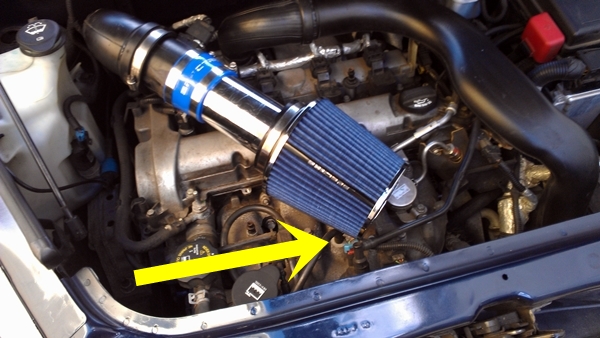
Maybe I didn't do it right, because there was no smoke when I fired it back up and took it for a drive.
I pulled the vacuum line, ran engine speed to about 2,000 rpm, and sprayed the contents of the can in, put the vac line back on and shut it down. After about 25 - 30 minutes, I took it for a drive and ran it hard. Well I tried to anyway. The boost gauge now goes from 15 psi to 25 psi in the blink of an eye. Yeah, 25 bone stock. I really need to get that solenoid tested.
Maybe I didn't do it right, because there was no smoke when I fired it back up and took it for a drive.
I pulled the vacuum line, ran engine speed to about 2,000 rpm, and sprayed the contents of the can in, put the vac line back on and shut it down. After about 25 - 30 minutes, I took it for a drive and ran it hard. Well I tried to anyway. The boost gauge now goes from 15 psi to 25 psi in the blink of an eye. Yeah, 25 bone stock. I really need to get that solenoid tested.
Thread Starter
Moderator
Joined: 05-01-2014
Posts: 8,499
From: California
I still have not yet had the leakdown test done. The P0234 overboost problem is fixed. I've done more compression checks, once on Dec. 26, and twice since, with 2 different testers, with similar results:
Cylinders 1,2,3 - 130-140 PSI
Cylinder 4 100-105 PSI
from another thread:
I brought it to normal operating temp, pulled fuse #13, restarted it and ran it out of fuel. Then pulled fuse #41 to begin testing, but then the engine would not crank at all, so I did the testing with fuse #41 in place. IIRC, my original test (cylinder #1 @ 180 PSI) I was able to crank with fuse #41 pulled out, but only once, cylinders 2,3,4 (and all testing since) I had to put the fuse back in.
I tried with the gas pedal to the floor, and without touching the pedal, it made no difference in test results at all.
So before I pay for a leakdown,
#1 With fuse #41 in place, will that cause false low readings?
#2 How could cylinders #1 and #4 drop so dramatically(in just a few weeks) and not show any performance problems or codes?
#3 Should the engine crank with fuse #41 pulled?
Cylinders 1,2,3 - 130-140 PSI
Cylinder 4 100-105 PSI
from another thread:
You should pull the fuel pump fuse (#13) and the ECM fuse (#41) in the underhood fuse box, then have a helper hold the gas pedal to the floor to initiate the "Clear Flood" mode while cranking the engine.
A healthy Ecotec should have between 155-180psi in each cylinder on a compression test, GM specs state that there should not be more than a 70% variation between the highest and lowest cylinder.
A healthy Ecotec should have between 155-180psi in each cylinder on a compression test, GM specs state that there should not be more than a 70% variation between the highest and lowest cylinder.
I tried with the gas pedal to the floor, and without touching the pedal, it made no difference in test results at all.
So before I pay for a leakdown,
#1 With fuse #41 in place, will that cause false low readings?
#2 How could cylinders #1 and #4 drop so dramatically(in just a few weeks) and not show any performance problems or codes?
#3 Should the engine crank with fuse #41 pulled?
Thread Starter
Moderator
Joined: 05-01-2014
Posts: 8,499
From: California
I'll guess at potential answers to my own questions, somebody tell me if I'm right or wrong.
My thought here is that perhaps with the fuse in place, The ECM is enabling the VVT to keep valves open, giving a false low reading.
The 180 reading on cylinder #1 the first time (with the fuse pulled) is now (with the fuse in place) in line with #2 and #3 (@140). Cylinder #4, @140 a month ago, and then @105 two and a half weeks later, is troubling.
??? I would think that Mike would not have given that advice were it not correct. However, the procedure may be different for the 2.0. I couldn't find any reference to the need to pull it on the cobalt forums.
#1 With fuse #41 in place, will that cause false low readings
#2 How could cylinders #1 and #4 drop so dramatically(in just a few weeks) and not show any performance problems or codes?
#3 Should the engine crank with fuse #41 pulled?


Senior Member
Joined: 09-07-2008
Posts: 1,016
From: Mebane, NC
I understand the pulling of the fuel pump fuse, I don't know what #41 does. The VVT sprockets are spring loaded to a straight up center position, the VVT solenoids direct oil pressure to the sprockets to vary the valve timing one way or another from the straight up mechanical setting.
If you do a leakdown you will hear where the air is going. If it's going into the crankcase... you know that's not good, if is going into the intake are the intake valves aren't seating.
If you do a leakdown you will hear where the air is going. If it's going into the crankcase... you know that's not good, if is going into the intake are the intake valves aren't seating.

Moderator
Joined: 01-23-2009
Posts: 26,448
From: Fredericksburg,VA
What adapter are you using on your gauge? If it's a screw-in then the gasket is suspect, if it's a push-in maybe a drop of oil on the rubber would promote a better seal.
In other words possible "operator error".
In other words possible "operator error".